

Equipment & weather
WEATHER
Greenland has an Arctic climate with average temperatures generally not exceeding 10°C during the hottest summer months. However, in the southern part of the country and the innermost parts of the long fjords, the temperature can rise to more than 20°C in June, July, and August.
Weather conditions in Greenland can change rapidly and the changing weather varies locally between different areas and from fjord to fjord. Mean temperatures are only advisory and are averages over a period of years. You may encounter considerably colder or warmer temperatures on site. Above information and below table with average temperatures is from Visit Greenland's website. As these are 24-hour mean temperatures, the average daytime temperature will be a little higher, whilst the average nighttime temperatures will be a little lower.
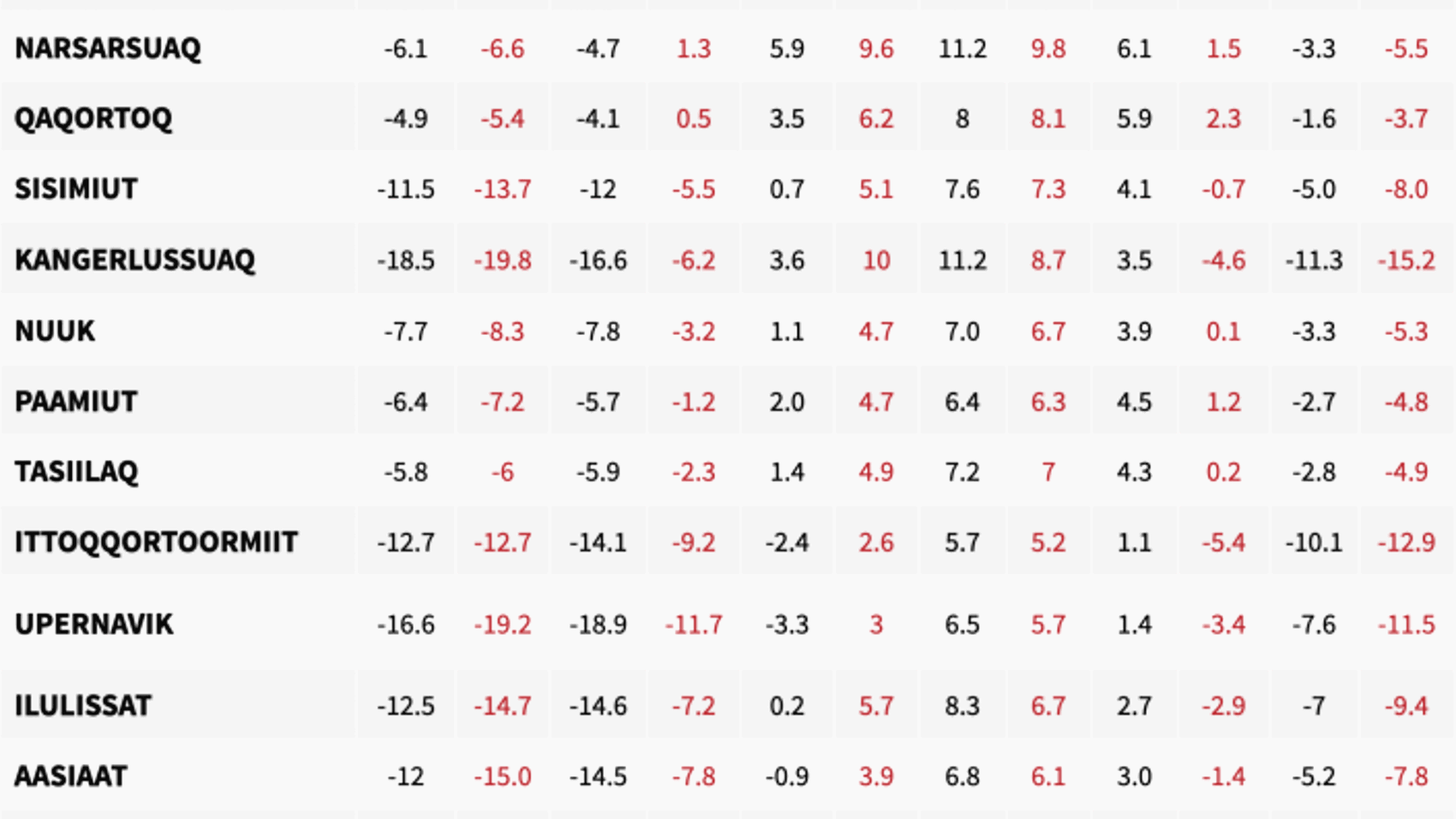
The humidity in Greenland is generally very low and the country's geographical location makes the air quality among the best in the world. Due to the dry air and low humidity in Greenland, summer temperatures can often feel warmer than you would otherwise expect.
Please be aware of the wind chill factor, which takes wind speed and humidity into account to assess how cold the temperature actually feels to the human body. The 'feels like' temperature is often significantly lower than the actual air temperature shown in weather forecasts.
With this in mind, we recommend dressing in layers, as this allows you to easily adapt to changing temperatures. Wear three layers or more to get rid of perspiration, insulate you from the cold and protect you against the wind. The layering method also allows you to easily adjust your clothing when the weather and temperatures change.
When going ashore by Zodiac, make sure to wear a windproof and waterproof jacket and trousers, as well as tall rubber boots. Below you will find some instructions on how to dress in polar climate, followed by an equipment checklist.
HOW TO DRESS
THE BASE-LAYER
The layer closest to your skin must wick perspiration away from your body to keep you dry and warm. Recommended materials include wool or synthetic fabrics. Cotton should never be worn next to the skin, as it absorbs moisture and loses its insulating properties when wet.
THE MID-LAYER
This layer provides insulation and retains body heat without restricting movement. Suitable materials for this layer are fleece or wool. It is better to wear several thin layers than one thick layer. On cold days you may need extra insulation. This way you control your body temperature.
THE OUTER LAYER
The main function of this layer is to offer protection against wind and water, but also to let out excess body heat. Therefore, it is good to use breathable materials such as Gore-Tex or similar.
THE TOP
Your head is one of the main areas through which body heat is lost, so we strongly recommend bringing a warm, windproof hat that fully covers your ears. Preferred materials are synthetic fibres or wool.
HANDS AND FEET
These parts of your body are particularly sensitive. It is important to keep hands and feet dry and warm. The same layering method applies here. Use inner gloves made of synthetic fibre, silk or wool and cover with a wind/waterproof mitten. Mittens are much warmer than gloves. Please remember to bring an extra pair of mittens. We recommend wool socks and preferably in layers. A pair of lined, solid and knee-high rubber boots is the secret weapon when going ashore with the Zodiacs, as you often need to wade ashore during nature landings. It is also wise to bring wool insoles.
Greenland invites to great hikes. It is strongly recommended to use sturdy and comfortable hiking boots on longer hikes. The terrain is uneven and rocky, and there are hardly any existing trails.
If you are considering bringing special equipment of any kind, please contact the PolarQuest office before travelling.
EQUIPMENT CHECK LIST
ESSENTIALS
- Passport
- Medication– (if applicable) to last the entire trip
LUGGAGE
- 1 soft bag – a large backpack or soft duffel bag for clothes and equipment to check-in. A soft bag is recommended as it is easily stored in your cabin.
- 1 backpack – a small, water resistant backpack for carrying extra clothing, medication, camera, and other essentials during Zodiac landings and shore excursions.
OUTER LAYER
- Jacket – water and windproof for example Gore-Tex.
- Trousers – water and windproof for example Gore-Tex.
- Hat – warm and windproof that covers ears.
- Gloves – water and windproof (bring extra pair).
FOOTWEAR
- Rubber boots – sturdy knee-high and lined and with warm wool soles.
- Hiking boots – a good, sturdy pair is essential for nature hikes.
- Regular shoes/sneakers – to wear on board the ship, with sturdy rubber soles to avoid slipping.
LAYERS
- Inner gloves – wool, synthetic or silk.
- Base-layer top and trousers – wool or synthetic fibre.
- Warm trousers – wool or fleece.
- Warm sweater – wool or fleece.
- Warm socks – wool or synthetic fibre.
IN ADDITION, WE RECOMMEND
- A good pair of binoculars
- Camera & memory cards
- Cleaning cloth – for camera lenses.
- Charger & extra batteries
- Waterproof bags – to protect your camera from getting wet during rubber boat cruises.
- Sunscreen – with high sun protection factor for face and lips.
- Sunglasses – preferably with necklace, so you do not drop them in the water.
- Bug repellent and a mosquito head net are your friends.
- Buff
- Cap – during the summer months the sun can be strong.
- Motion sickness medicine – pills, wrist bands or patches for seasickness.
- Swimwear – in case you get the opportunity to take a polar plunge.
- Water bottle
- Ear plugs
- Heat packs – for your gloves or boots, if you know that your hands and feet easily get cold.
- Walking sticks – are available on board, but you’re welcome to bring your own if preferred. Please ensure they’re foldable and packed in checked luggage.