


This journey takes us to two of South America’s most extraordinary worlds, the Galapagos Islands and the Amazon Rainforest, where remarkable wildlife encounters and striking natural beauty await. In the Galapagos archipelago, we meet playful sea lions on white sandy beaches and photograph the iconic giant tortoises. The wildlife here is famously curious and unafraid of humans, creating countless unforgettable close encounters. The experience is further enriched by several days in the Amazon Rainforest, where a completely different environment of lush greenery and exceptional biodiversity unfolds.
Our adventure begins on mainland Ecuador with time to explore the capital, Quito. In the Galapagos Islands we spend seven nights on board the small and comfortable yacht Coral II. Each day we go ashore by rubber boat to explore the islands’ unique nature and wildlife. Snorkelling equipment is available on board, and several times during the trip we have the opportunity to marvel at the islands’ magical underwater world. After our memorable time in the Galapagos, we continue the journey in the Amazon Rainforest with scenic hikes, canoe journeys and fascinating wildlife encounters.
NEW 2027 DEPARTURE DATES COMING SOON!
-
Maximum 15 participants
-
7 nights in the Galapagos
-
Visit 8 different islands
-
Encounter giant tortoises, iguanas & sea lions
-
4 nights on mainland Ecuador
-
3 nights in the Amazon rainforest
Facts about the trip
-
 © Mattias Horntrich
Galapagos -
 © Mattias Horntrich
Galapagos -
 © Go Galapagos
Galapagos -
 © Adam Rheborg
Galapagos -
 © Martin Berg
Galapagos -

Sacha Lodge, Amazon -
Sacha Lodge, Amazon -
 © Martin Berg
Galapagos -
 © Go Galapagos
Galapagos -
 © Martin Berg
Galapagos -

Canopy Walk - Sacha Lodge -
 © Go Galapagos
Galapagos -
 © Staffan Widstrand
Galapagos -

Rainforest walks, Amazon -
 © Klein Tours
Galapagos -

Sacha Lodge, Amazon -
 © Adrian Nordenborg
Galapagos -
 © Adam Rheborg
Galapagos -
 © Martin Berg
Galapagos -
 © Martin Berg
Galapagos -
 © Go Galapagos
Galapagos -
 © Marck Gutt Don Viajes
Three toed sloth, Amazon -
 © Adam Rheborg
Albatross, Galapagos -
 © Go Galapagos
Galapagos -
 © Go Galapagos
Galapagos -
 © Adam Rheborg
Galapagos -
 © Marck Gutt Don Viajes
Kapok Tower - Sacha-Lodge -
Canoeing Pilchicocha Lake, Amazon -
 © Martin Berg
Galapagos -
 © Staffan Widstrand
Galapagos -
 © Adam Rheborg
Galapagos -
 © Klein Tours
Quito, Ecuador -

Butterfly House - Sacha Lodge -
Standard room at Sacha Lodge, Amazon -
La Balsa Restaurant, Sacha Lodge, Amazon -
Oropendola Restaurant, Sacha Lodge, Amazon -

Amazon -

Giant River Otter, Amazon -

Capuchin monkey, Amazon -

Amazon -

Amazon -

Amazon -

2 hour ride in motorized Canoe to Sacha Lodge, Amazon -

30 minutes hike to Sacha Lodge, Amazon -

Paddle canoe over the lake to reach Sacha Lodge, Amazon


Itinerary
Day 1: Quito
You arrive with own flight to Quito’s International Airport, situated at 9300 ft above sea level and flanked by the snow-capped peaks of the Andes. We check in to the charming Hotel Cultura Manor and have our first dinner together, the first of many more to come. We spend the night at Hotel Cultura Manor. A PolarQuest guide will escort us throughout the trip and in Galapagos two knowledgeable National Park guides will also join us. We will also be joined by other local guides throughout the trip.
Day 2: Quito
We explore the old town of Quito, listed as an UNESCO's World Heritage site. We also visit El Panecillo, from where we have an excellent view of Quito. Afterwards we go back to Hotel Cultura Manor to have dinner and spend the night.
Day 3: Quito - Baltra - Santa Cruz, Galapagos
We fly from Quito to Baltra in Galapagos early in the morning and board our comfortable motor yacht Coral II. We start off our journey with the island of Santa Cruz. We have a dinghy ride at the entry of the Itabaca Channel in a lagoon with turquoise water, where we can observe sharks, blue-footed boobies and different kinds of fish. In the evening we will enjoy our first dinner on board.
Day 4: Genovesa Island
At El Barranco we will be marveled at the variety of sea life that uses the crevices of the lava cliffs for shelter. Red-billed Tropicbirds fly overhead, and a small colony of fur seals may be found near the landing site. We will be dropped off at a steep stairway that begins on rocks at the foot of a path that leads through a seabird colony full of Nazca and Red footed Boobies.
From within the flooded caldera of Tower Island, we set foot onto the sandy beach of Darwin Bay to be greeted by swallow tailed gulls often said to be the most beautiful gull in the world. In the trail we can see nesting red footed boobies and great frigatebirds.
Day 5: Rabida Island & Bartolome Island
Lying at the archipelago's heart, the dramatic Rabida Island with a distinctive red-sand beach is home to sea lions, mockingbirds, finches, endemic Galapagos doves, and vermilion flycatchers. A morning walk takes us through a forest of palo santo and cacti to a beautiful overview of the bay.
In the afternoon we will go to Bartolome Island, considered the most iconic landscape of the entire archipelago. The view from the top of Bartolome Island, overlooking the famous Pinnacle Rock and the austere Santiago Island is stunning. Our subsequent snorkel here might put us face to face with Galapagos penguins, white tipped reef sharks, and playful sea lions.
Day 6: Santa Cruz Island
This morning we visit the Charles Darwin Research Centre, where giant tortoises and land iguanas are bred. During our exciting tour we learn more about these fascinating pre-historic animals. Also in the central highlands of Santa Cruz Island, we have our best opportunity to interact at close quarters with totally wild, Galapagos giant tortoises. A short walk among these huge, 6001b, reptiles will also offer the chance for more species, especially several species of the famed finches.
After lunch we will visit the Black Turtle cove, on the north shore of Santa Cruz Island. Accessible only by sea, four species of mangrove crowd form this internal lagoon, turtles visit the calm waters, peaking their heads above the surface while fish, rays circle below. White-tipped reef sharks can be seen beneath the boat, plus sea birds, including pelicans, herons and egrets. This cove has been declared as a "turtle sanctuary".
Day 7: Isabela & Fernandina
Today we get familiar with Isabela, the largest island in the archipelago, formed by six young and still active volcanoes. As we cruise along the cliffs at Punta Vicente Roca we hope to spot the Nazca boobies, blue-footed boobies and the endemic flightless cormorant.
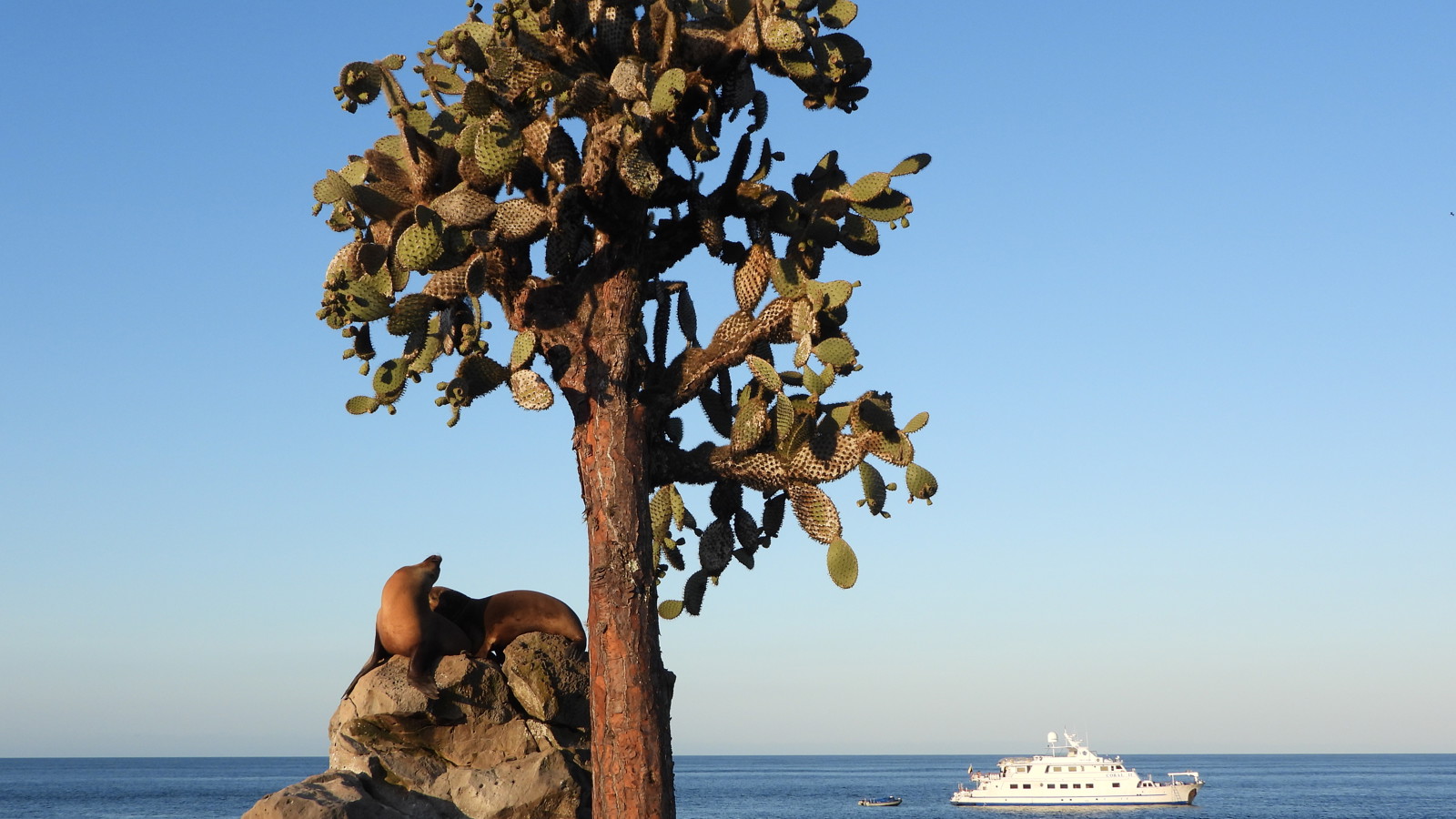
Later, on our way to Fernandina, we cross the Bolívar Channel and keep a look out for whales and dolphins. Fernandina is the youngest island of the Galapagos and has no introduced animal or plant species. Punta Espinoza is famous for its large colonies of marine iguanas. It is also the habitat of Sally Lightfoot crabs and sea lions as well as several unique species such as the flightless cormorant, Galapagos penguin and Galapagos hawk - the king of the predators on the islands. The landscape is dominated by cactuses, mangrove areas and different types of lava flows.
Day 8: Isabela
We return to Isabela and go ashore at the black volcanic beach of Urbina Bay. During a walk we hope to encounter the colourful land iguanas. This is also one of Galapagos’ many great snorkelling sites and we have the chance to swim with sea turtles, sea lions and countless tropical fish.
Close to Urbina Bay is Targus Cove, a natural harbour, where whalers and pirates from centuries ago painted and carved their ships’ names on the rocks. From here we make our way up to Darwin’s crater, which today is a salt-water lake, to enjoy the rewarding views of lava fields and volcanic formations. Afterwards, we enjoy a panga (rubber boat) ride along the shoreline to admire a variety of seabirds such as blue-footed boobies and flightless cormorants. If we are lucky, we may also encounter the little Galapagos penguin – the only penguin species in the world living in the tropics.
Day 9: Santiago Island
Egas Port is a black volcanic sand beach, visited by Darwin in 1835. The unique, truly striking layered terrain of Santiago shore is home to a variety of animals including the bizarre yellow-crowned night heron and marine wildlife including lobster, starfish and marine iguanas grazing on algae beds alongside Sally Lightfoot crabs. It is also common to see colonies of endemic fur seals swimming in cool water volcanic rock pools.
On the South-eastern side of Santiago Island we find Sullivan Bay, named after Bartholomew James Sullivan - a lieutenant on Darwin’s vessel, the Beagle. Here we take a walk through a fascinating moon landscape, where the young pa-hoe-hoe lava flows were formed during the last quarter of the 19th century.
Day 10: Santa Cruz - Quito
Named for some wrecked World War II barges whose ribs are still visible in the sand this visitor site at Bachas Beach offers great swimming, a lovely walk along the shore, and a visit to a lagoon behind the high tide line with wading birds, marine iguanas and sometimes even flamingos. The two beaches are also favorite nesting sites for green turtles which often leave tractor-like tracks in the sand.
It is now time to say goodbye to this enchanting group of islands and fly from Baltra airport back to Quito in Ecuador. We spend the night at Hotel Cultura Manor.
Day 11: Sacha Lodge, The Amazon rainforest
In the morning we join a 30-minute flight from Quito over the Andes Mountains to a bustling little town called Coca, located in the Amazon Rainforest. Here we invited for lunch in a private house and then we are off to the town docks where we will board a motorised canoe for a spectacular 2-hours journey down the river. Followed by a nice 30-minutes hike (mostly flat terrain) through the rainforest to lake Pilchicocha, a black water lake home to many species of fish and animals. At the lake we are met by native guides who will paddle us in canoes across the lake, bringing us to our destination, Sacha Lodge.
After we have checked in at Sacha Lodge we will have a refreshing swim in the lagoon of lake Pilchicocha. We can do some bird observing from the mini tower at the lodge, an excellent opportunity to view several species of birds common in the area. Also, a great place to watch the sunset. We can also visit the butterfly house with a naturalist guide to view the beautiful colours of many different species of butterflies.
After dinner, we will join the naturalist guide on a night walk through the rainforest to view the hundreds of different species of animals that can only be found at night. Or for those who want a canoe ride on the lake to view the spectacled and black caimans with their glowing orange eyes as we silently paddle across the lake to get a closer view.
Day 12: Sacha Lodge, The Amazon rainforest
Today we start with a hike on the trail Liana Chica to get spectacular views of the rainforest canopy and the many different species of vibrantly coloured birds. We will get an up-close and personal view of the rainforest canopy. The canopy walkway is at at height of 36 meters giving us a “birds eye view” of all the wonders and beauty the tropical rainforest.
Day 13: Sacha Lodge, The Amazon rainforest
Today we will do a hike on trail Lagartococha. We will learn about the trees where native people believe the spirits of their ancestors live, and the mysterious “dwende” or devil-man of the forest. After arriving at lake Lagartococha, we will take a tranquil canoe ride through a natural swamp, which is the home of anacondas, caimans, and capybaras. We will then continue our walk on the other side of Largatococha, which give us the opportunity to hopefully spot capuchin or squirrel monkeys playfully jumping through the trees. Our native guide will teach us how to fish for the infamous razor-toothed piranha, while being surrounded by troops squirrel, capuchin, and howler monkeys. We keep our eyes peeled for the shy and elusive river otter as well as the incredibly well camouflaged three-toed sloth.
After our eye-popping ride through the flooded forest, we will arrive back at Sacha Lodge and walk up in the 40 metre wooden tower built around an ancient Kapok tree. Here we will listen to the symphony of frogs and insects as we navigate through the arrow flooded forest trail, keeping our eyes open for caimans. Watch the several species of bats flying over our heads and listen to the many species of nocturnal birds making their eerie nighttime calls.
Day 14: Sacha Lodge - Quito
After breakfast we will check out from Sacha Lodge and make a last walk on the boardwalk to the river, and from there the 2-hour canoe ride back to the town Coca for our short flight back to Quito. We will arrive back to Quito in the afternoon and check back in to Hotel Cultura Manor.
Day 15: Fly home
We say goodbye to our new friends and make our way to Quito airport and our flights back home.
Day 16: Arrive home
Back home.
Please note: Our exact route and port calls will depend on local authorities and might be subject to change.
Map
Map - Itinerary in Galapagos

Videos from this trip
-
-
© Sacha Lodge, the Amazon
Coral II
Passengers
15Crew
11Built
2004Cruising Speed
12 kn-
-
 © Klien Tours
 -
-
-
 © Klien Tours
 -
-
-
 © Klien Tours
Superiorhytt -
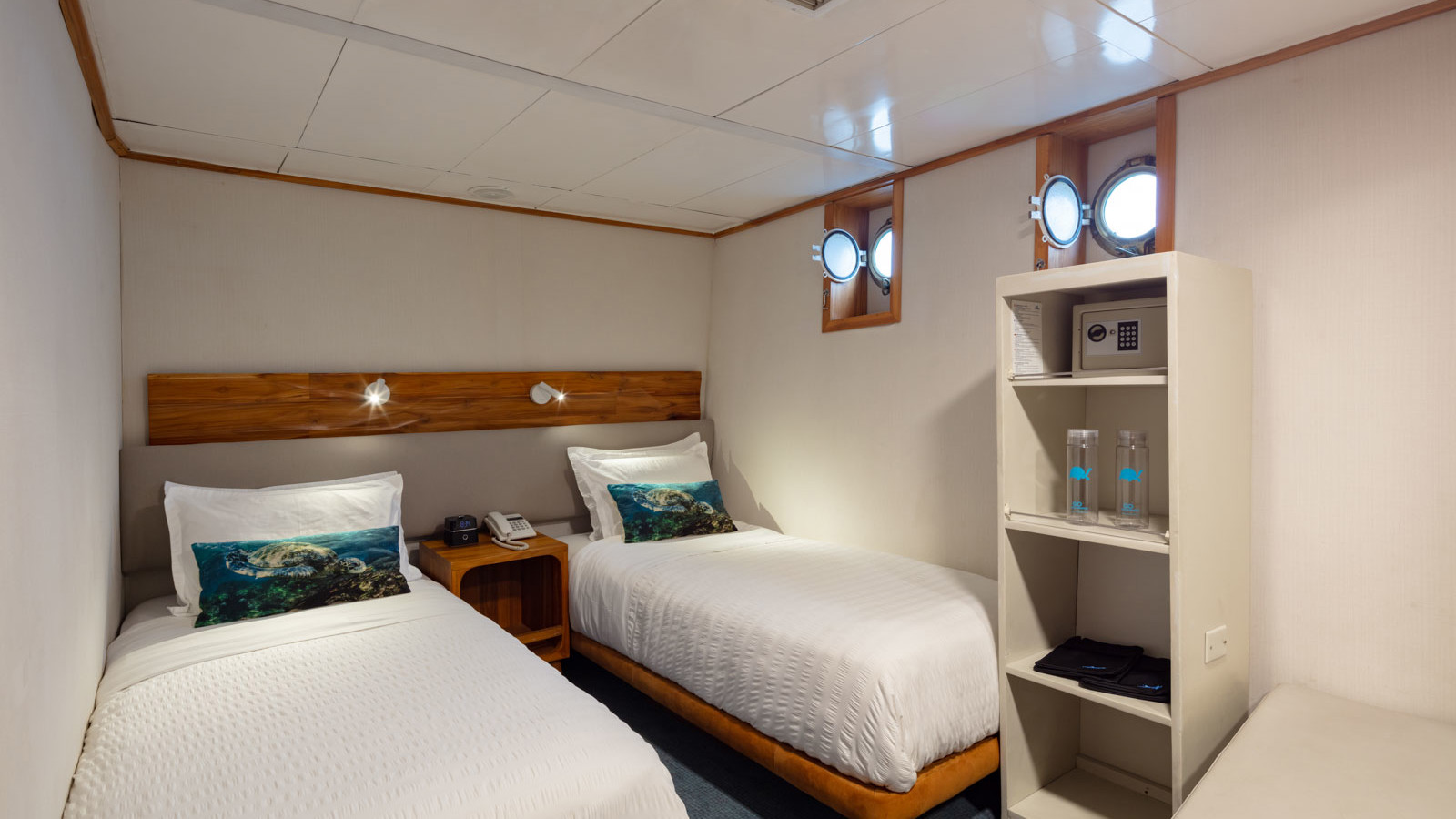
Standard cabin -
 © Martin Berg
 -
 Martin Berg
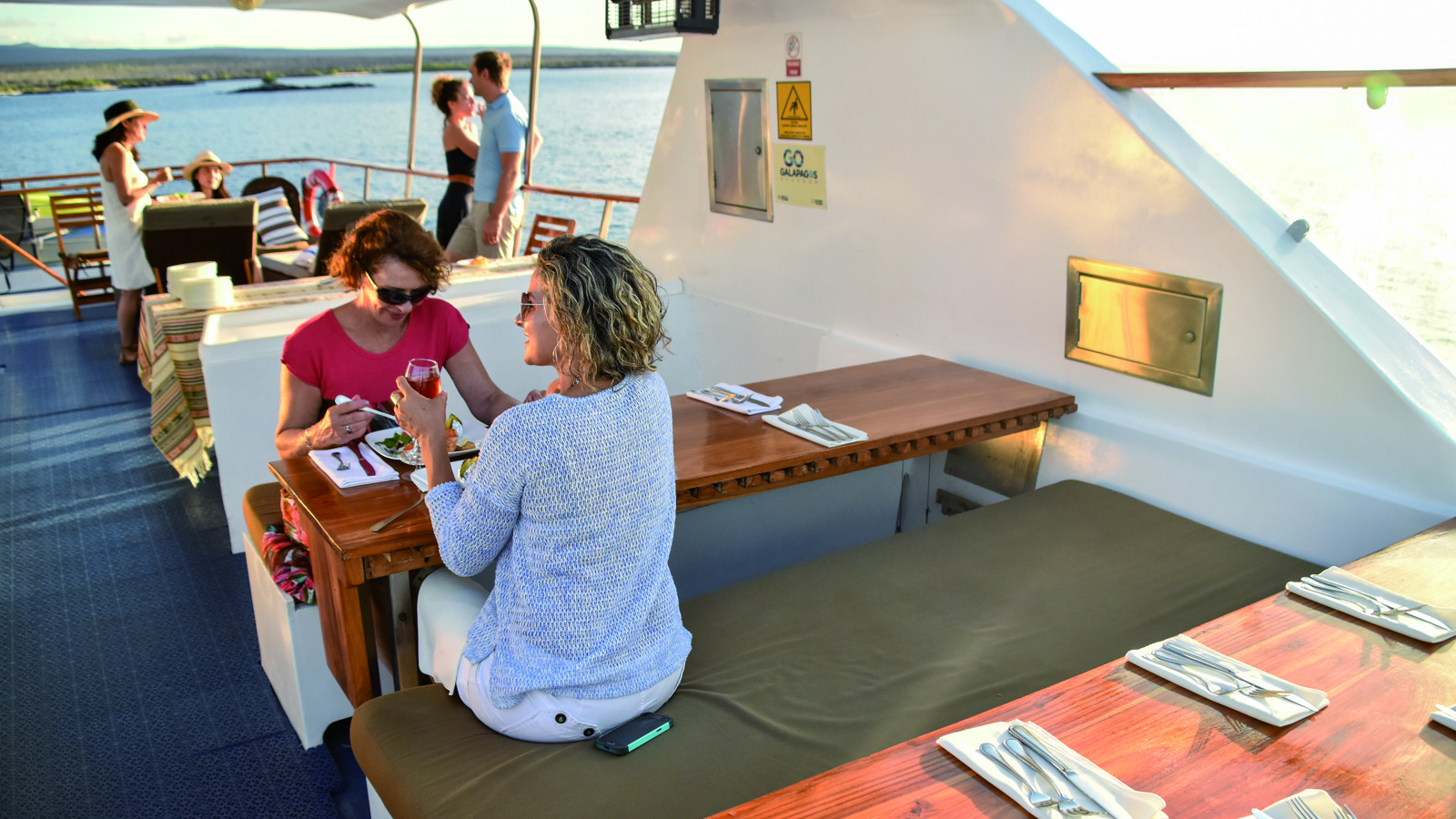
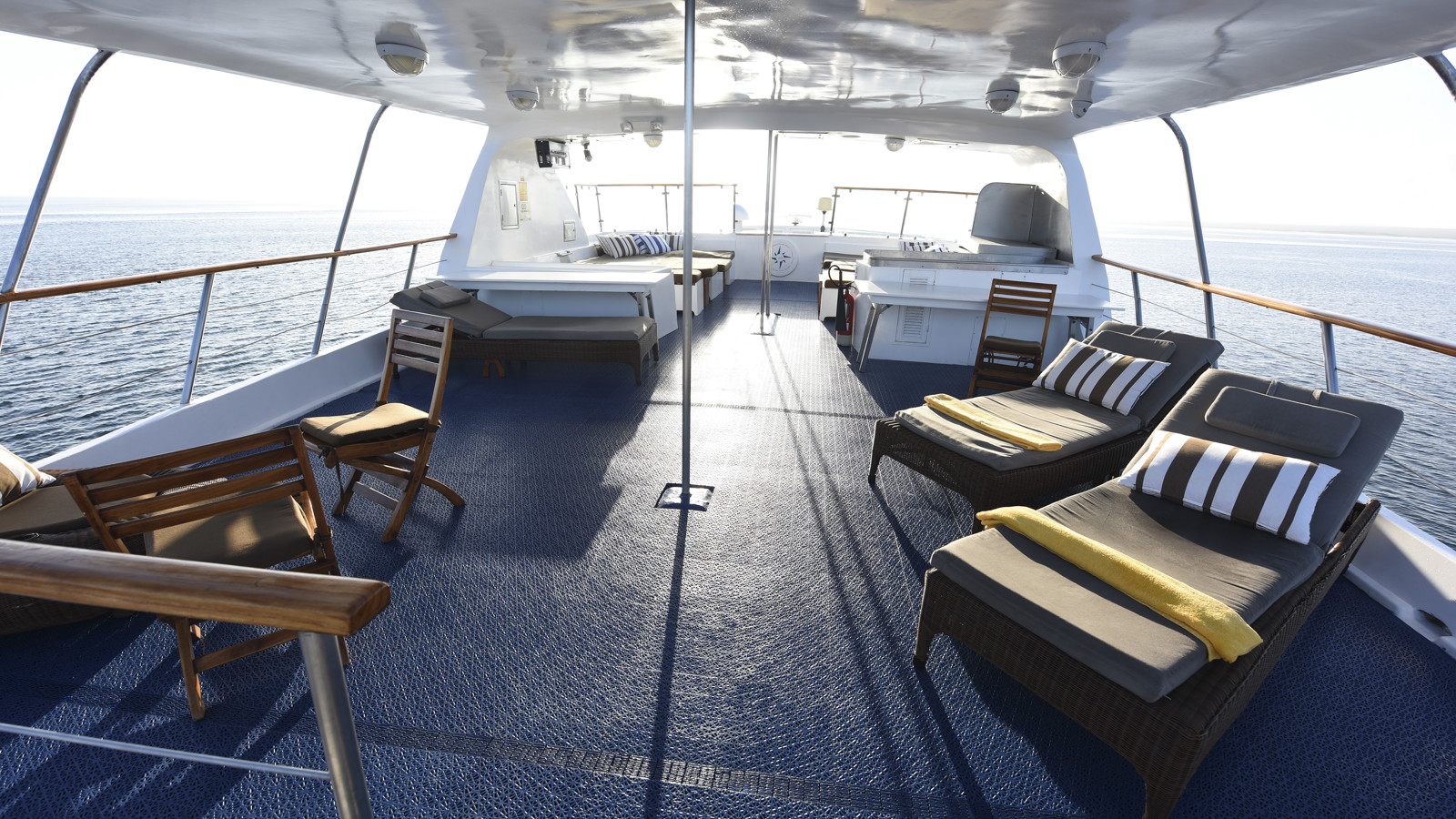
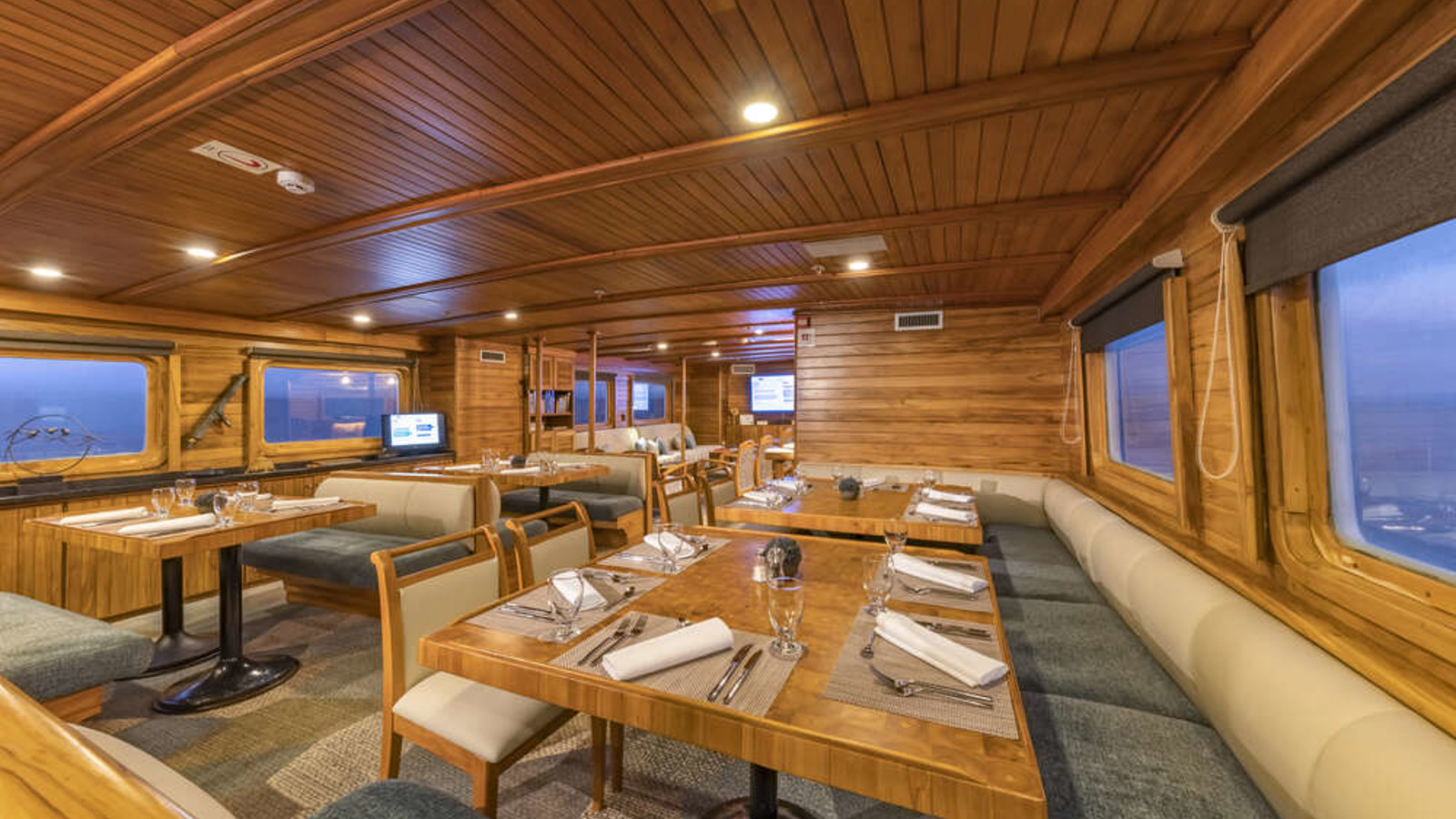
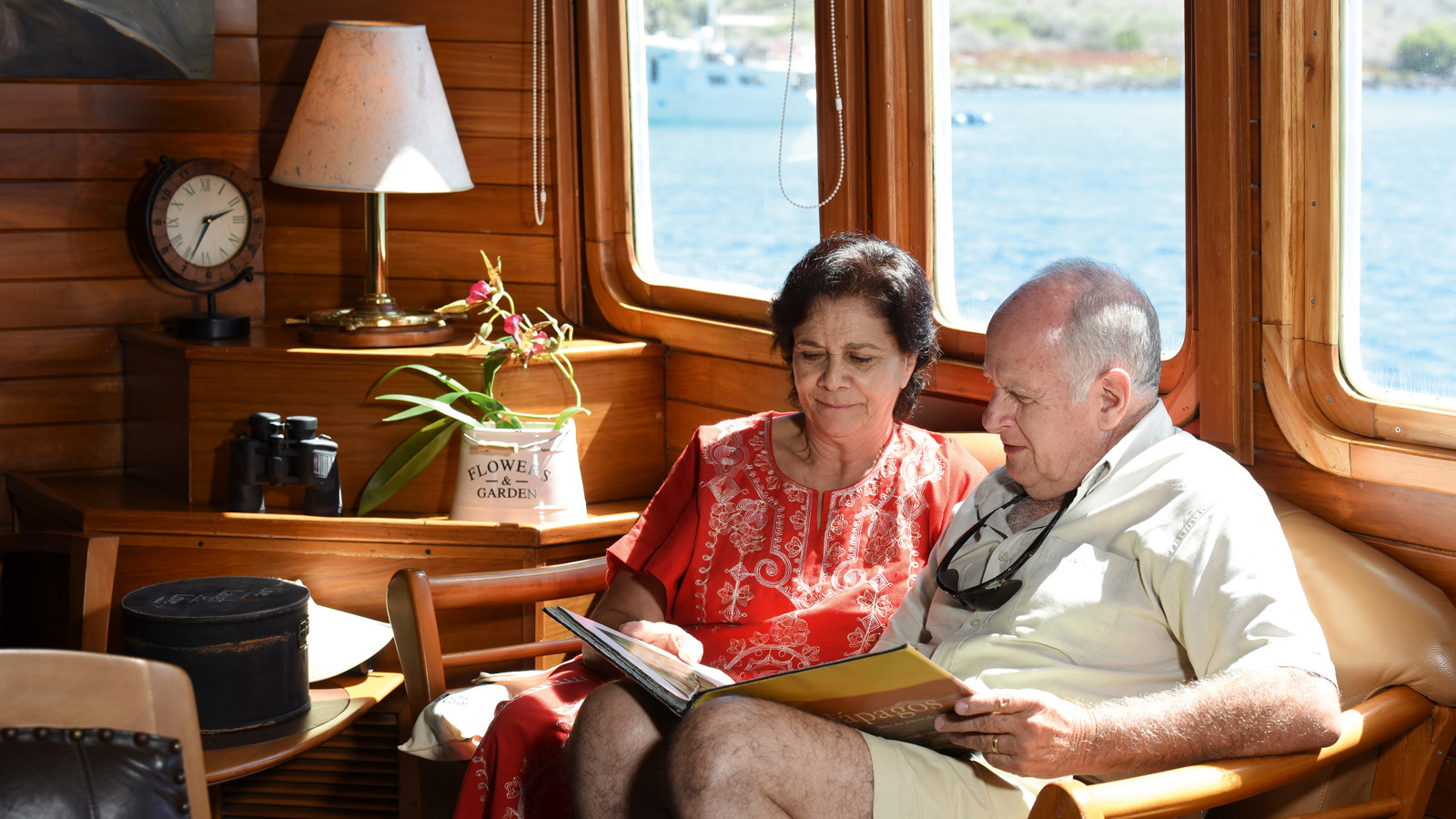
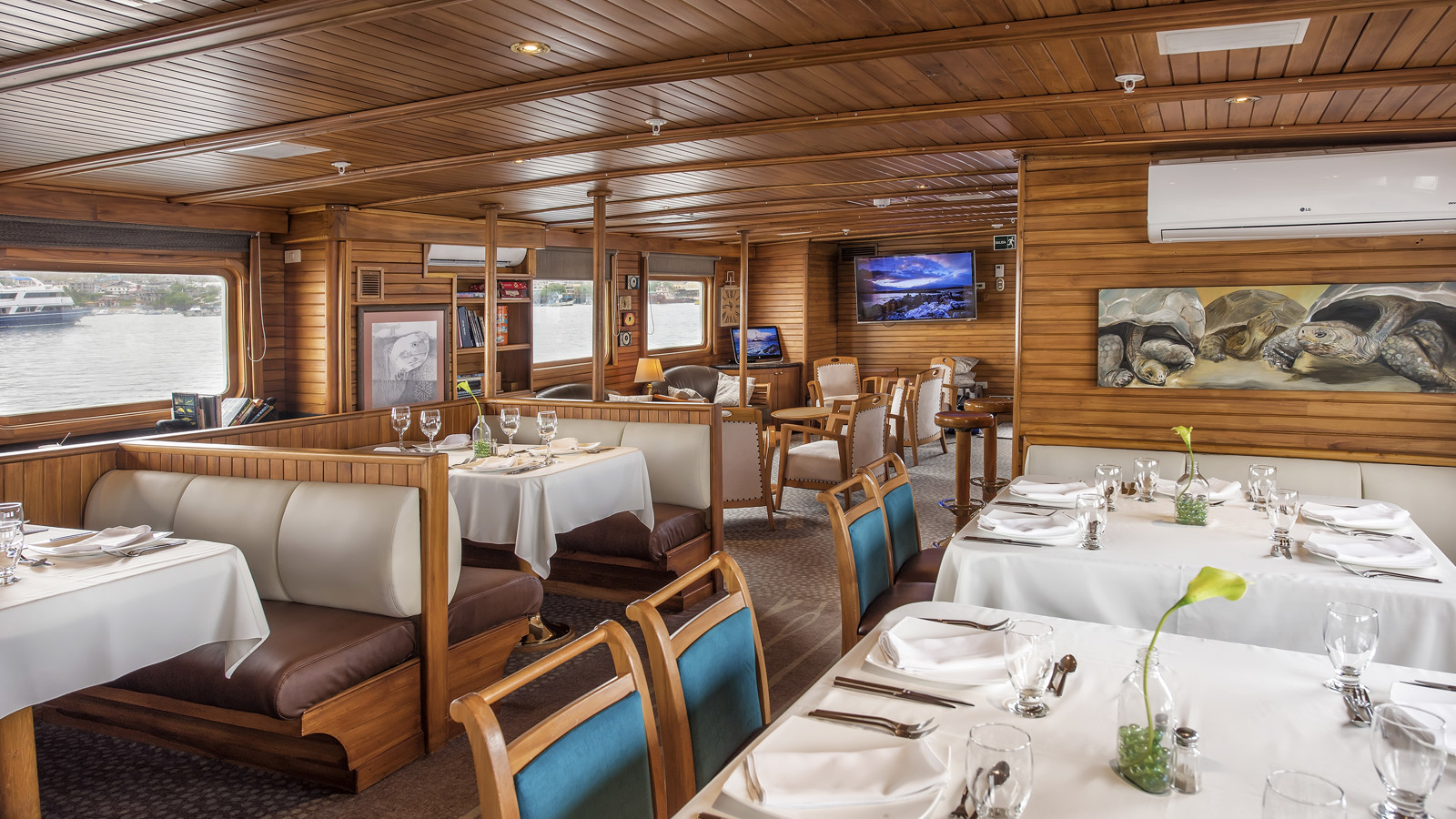
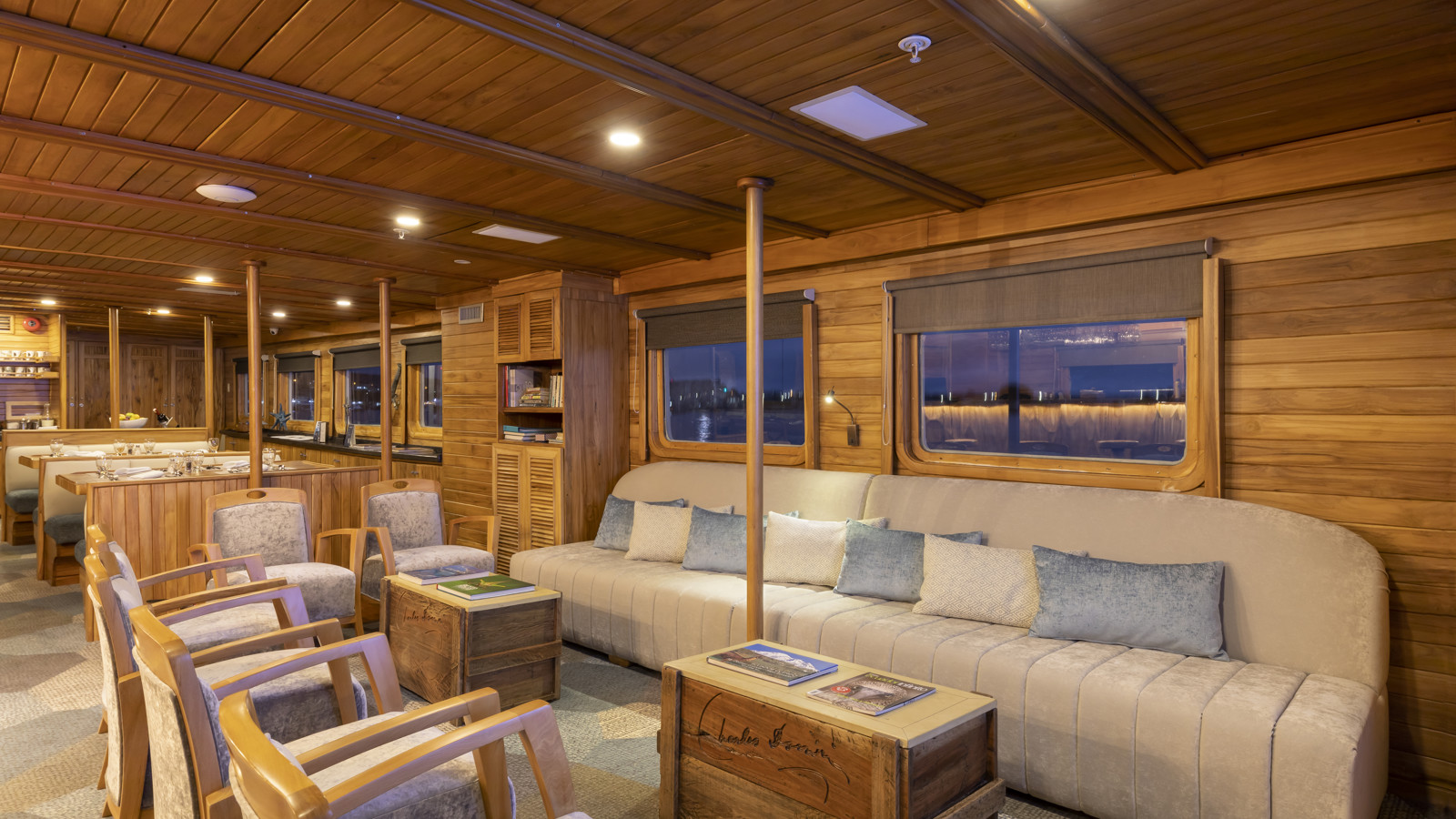
The expedition yacht has comfortable cabins accommodate 15 passengers. The yacht has the latest navigation equipment and is decorated in classic maritime style with teak and brass.
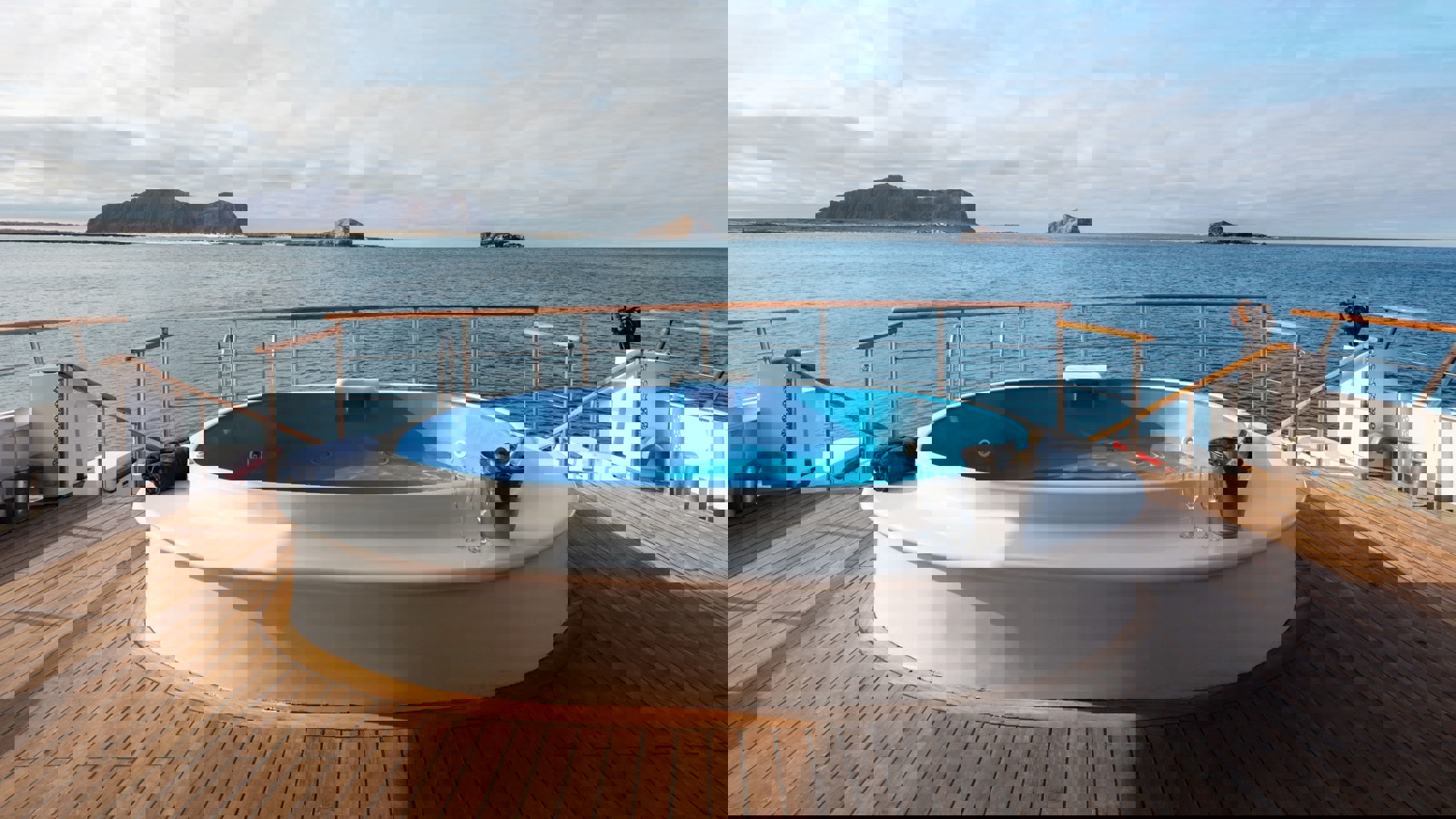
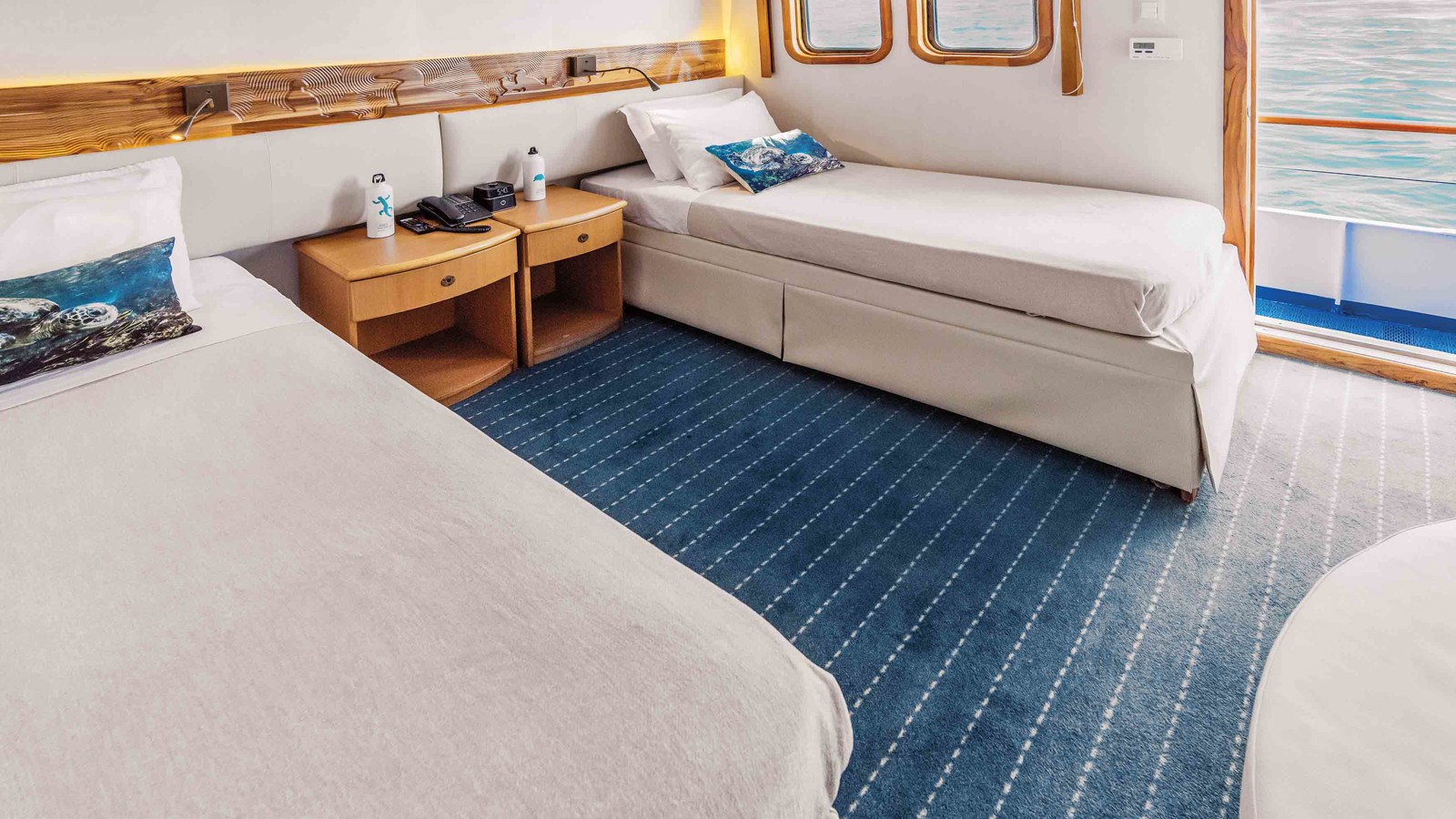
All cabins are air-conditioned, have private shower/WC and windows/port holes. Facilities on board include a comfortable lounge, a dining room, a well-stocked bar, three sun decks and a plunge pool. The bridge is open to visitors at all times.
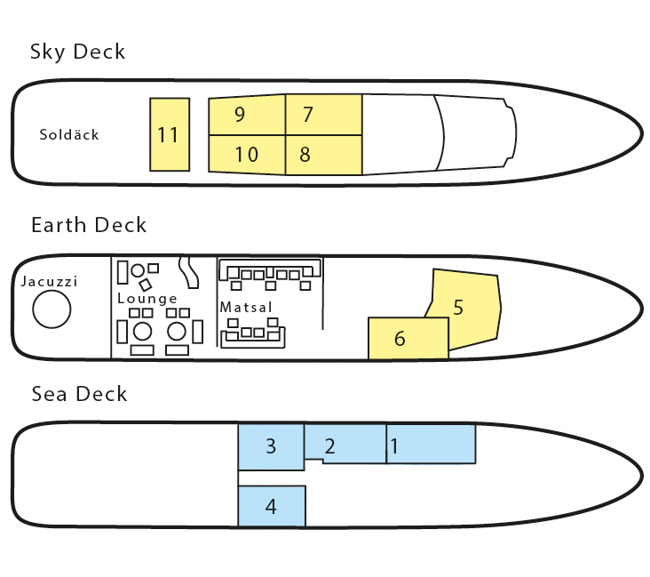
Cabins & prices
| Cabin category | Bed | Prices 2026/person | |
|---|---|---|---|
| Standard Cabin | 2 separate beds or double bed | 12 590 USD | |
| Superior cabin | 2 separate beds or double bed | 14 190 USD | |
| Standard Cabin for single use | 15 390 USD | ||
Included in the price:
- Flights Quito - Baltra (Galapagos) t/r
- Flight Quito - Coca (Amazon) t/r
- 7 nights on board the Coral II
- 4 nights in standard room at Hotel Cultura Manor in Quito
- 3 nights in standard room at Sacha Lodge in the Amazon
- Sightseeing in Quito
- All transfers
- All meals
- 1 PolarQuest tour leader
- 2 National Park guides in Galapagos and local guides in Quito and native guide in the Amazon
- Lectures on board and guided walks ashore
- Snorkeling equipment and wetsuit on board Coral II
- Entrance Fee to the Galapagos National Park (USD 200)
- The customary gratuity to all local guides and ship’s crew
- Slideshow from the trip
- Full carbon offset
Not included in the price:
- International flights to and from Ecuador
- Travel and cancellation insurance
- Beverages
- Airport taxes