
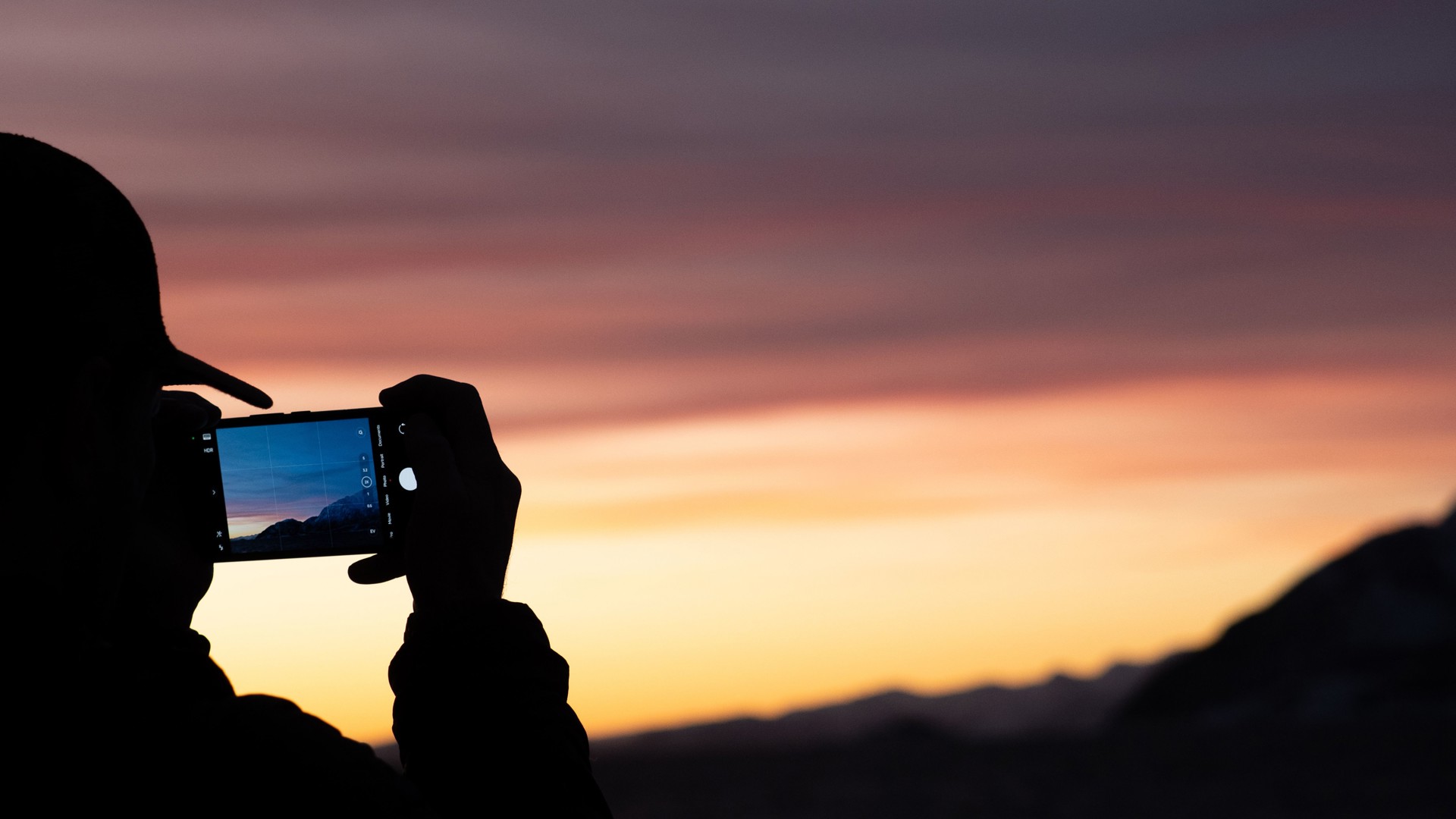
Photography & binoculars
For many of us, a camera is a natural travel companion. Whether you’re an experienced photographer or simply want to capture beautiful memories, we’ve gathered a few simple tips to help you take better photos. You’re also welcome to take a look at our UAV/drone policy and our recommendations for choosing binoculars.
PHOTOGRAPHY
Equipment: Whatever type of camera you use, make sure it is working properly before you leave home. If you have a new camera or have a camera that has not been used for a while, it is a good idea to take some pictures before travelling to ensure that it works properly. Also remember to bring your camera manual.
Batteries: Bad batteries account for the largest percentage of camera problems on expeditions, especially in cold climates. For this reason, please bring extra camera batteries with you, even if the one in your camera is new.
Memory cards: Rule of thumb is to bring more memory cards than you believe you will need.
Tripods: Tripods, which are often used to steady cameras with large telephoto lenses, are not useful on ships, as they tend to transmit the ship’s vibrations. However, a tripod is an essential accessory when photographing the Northern Lights from land.
Maintenance: Particles or water can easily stick on the camera lens, which can reduce the image quality. For this reason, we recommend you bring a microfiber cloth designed for optics.
Storage: Cameras are generally sensitive to water, salt water spray, moisture, and shock. During Zodiac operations and landings, exposure to salt water is possible. A protective, water-resistant bag or backpack is therefore strongly recommended.
BINOCULARS
Binoculars are truly a must-have for anyone who wants to experience nature up close.
They make a real difference – helping you spot details and moments that might otherwise go unnoticed. It’s a simple way to enhance your entire travel experience. We strongly recommend that all our guests bring a pair of binoculars on the trip.
All binoculars are specified by magnification and lens diameter, for example 8×32 or 10×50. The first number indicates the magnification, and the second refers to the diameter of the front (objective) lens. A magnification of at least 8× is recommended; 8×32 or 10×42 binoculars are good choices."
“Wide-field” binoculars allow you to see a wider area making it easier to spot wildlife.
Compact models, in the 8x25 range, can fit in a pocket and are very lightweight, but sacrifice brightness and field of vision.
Rubber coated models are generally more shock resistant and some of these are also waterproof.
DRONES
Please note: The use of unmanned aerial vehicles (UAVs), commonly known as drones, is not permitted for general use by revenue passengers, in accordance with AECO guidelines.