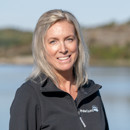

Since buying his first Nikon at 14, award-winning wildlife photographer and filmmaker Florian Schulz describes his life as an ongoing expedition. In this interview, he shares his deep passion for wildlife and nature, and reflects on how to combine family life with such an extraordinary career. In May, Florian will join one of our M/S Quest expeditions as a guest lecturer, offering behind-the-scenes insights into iconic productions such as Frozen Planet and Planet Earth, as well as tips for those looking to develop their photography skills.
I moved to Alaska so it would be my backyard.
You’re originally from Germany – what brought you to Alaska, and how long have you lived there?
– Have you read Jack London's The Call of the Wild? I did – and honestly, I felt that calling long before I understood what it meant. My first trip to Alaska was in 2000, and I fell in love immediately.
Over the years that followed, I spent many months in the wild – watching tens of thousands of caribou move across the tundra, standing beside salmon streams filled with bears, and watching giant humpback whales breach right in front of my boat. I wanted to be as close to the wild as possible, so eventually the decision was simple: I moved to Alaska so it would be my backyard. I've probably spent more time there than anywhere else since 2010, and at some point it just became home. Jack London would understand.


What sparked your interest in photographing and filming the world's wilderness?
– My passion for photography started very early. I would borrow my dad's Praktika – a fully manual camera – and head out into the forests and nature reserves near our home. I saw extraordinary things: baby foxes tumbling in front of their den, a kingfisher plunging for fish in a flash of blue. When I came home and tried to describe what I'd seen, my family would nod politely.
My friends? Even less enthused. I quickly realized that words simply weren't enough – I needed to show people. So I saved up every bit of money I had, and at age 14 I became the proud owner of my first Nikon. The rest, as they say, is a very long expedition with a lot of camera gear.
I tell stories from the wildest corners of Earth – in film, in photographs, and on stage – always with the hope that people will care enough to protect what they see.
Could you describe your profession and share examples of films or photography projects you’ve worked on?
– I'm a National Geographic wildlife photographer and BBC filmmaker – which in practice means I spend a lot of time in places most people would consider deeply uncomfortable, carrying equipment most people wouldn't know how to lift. My work has taken me from the jungles of Mexico to the pack ice of the High Arctic. I've worked as director of photography on some of the most ambitious natural history productions ever made: Planet Earth III and Frozen Planet II for the BBC, Incredible Animal Journeys for National Geographic and Disney+, and Our Living World for Netflix, among many others.
Beyond those commissions, my family and I directed and filmed our own giant screen IMAX film, The Arctic: Our Last Great Wilderness – a project that grew out of years of expeditions and remains one of the closest to my heart. I've also founded conservation initiatives including the Freedom to Roam wildlife corridor movement. In short: I tell stories from the wildest corners of Earth – in film, in photographs, and on stage – always with the hope that people will care enough to protect what they see.


What is the most rewarding part of what you do, and what is the most challenging?
– The most rewarding moments are the ones no camera can fully capture – when you are completely alone in a wild landscape, witness to something ancient and real, and you realize that very few humans have ever stood in that exact spot and seen what you're seeing. Those moments remind me why I chose this path.
The most challenging part? Honestly, it's the absence. For years we had no satellite coverage – you were simply gone, unreachable, somewhere on the tundra or the pack ice. Only in recent years has Starlink begun to change that reality.
Our kids didn't get a conventional childhood – they got a wilder one.
How do you combine family life with a profession like yours?
– The solution we found was also the most natural one: bring the family along. My sons have grown up on expeditions, on boats, in wilderness camps. They've seen wolves, bears, and whales – not in documentaries, but right outside the tent. My partner Emil is not only my life companion but also my production partner and creative director.
We are, in the truest sense, a wildlife family. Our kids didn't get a conventional childhood – they got a wilder one. At least that's what I tell myself when we're all soaking wet and the satellite phone is the only thing connecting us to the rest of the world.


Can you tell us about an exciting or memorable situation you've found yourself in?
– One of my most unforgettable moments happened right here in the waters of Svalbard, drifting in the pack ice. I was working on the IMAX film To the Arctic, and for days we followed a polar bear mother and her cubs near the ship. We watched her nurse them, move with them across the ice, care for them with fierce tenderness. It was deeply moving – a window into a world very few ever witness. Then one day, a large male bear caught their scent. Silently, with terrifying precision, he began stalking them – a predator closing in on the most vulnerable. We watched the whole thing unfold in tense silence. Closer. Closer still. And then, in the very last moment, the mother sensed the danger – and everything exploded into motion.
How that story ends… I'll tell you on board. Some things are worth waiting for.
Svalbard holds a very special place for me.
Can you tell us about your relationship with the polar regions, and with Svalbard in particular?
– I have worked in the Arctic for over 25 years – since that first visit to Alaska in 2000 that changed the direction of my life. The Arctic has been the central chapter of my career and, increasingly, a place I feel a deep personal responsibility toward. It's changing faster than almost anywhere else on Earth, and I've watched that transformation with my own eyes across decades of expeditions.
Svalbard holds a very special place for me. I first travelled there to work on To the Arctic, drifting in the pack ice, camping on the tundra, spending weeks in one of the most extreme and beautiful landscapes I've ever encountered. It's a place that humbles you completely. There's nowhere else on Earth quite like it – and that's exactly why protecting it matters so much.


– What can guests expect if they join this Svalbard expedition, where you are on board as a guest lecturer?
They can expect to go behind the scenes of some of the most iconic natural history films of the past decade – Frozen Planet II, Planet Earth III, To the Arctic – and hear the stories that didn't make the final cut.
But also stories from far beyond the Arctic: from the rainforests of Mexico, the wildlife corridors of North America, and some of the most remote corners of the planet I've had the privilege to work in as a photographer and filmmaker. I'll be giving several in-depth lectures drawing on 25+ years in the field, sharing wildlife encounters and insights into the Arctic ecosystem and the extraordinary animals that call it home.
And for those who want to sharpen their photography skills, I'll be right there on board with you – answering questions, sharing what I know, and joining you on the Zodiac rides. Because out there on the water, with walrus hauled out on ice, seabirds wheeling overhead, and – if we are very, very lucky – a polar bear appearing on the horizon... that's when the real classroom begins.
-
 © Florian Schulz
 -
 © Florian Schulz
 -
 © Florian Schulz
 -
 © Florian Schulz
Please note: Depending on the lens used for a photo or video shot an animal may appear to be closer than it is. We always follow strict wildlife guidelines to ensure that we do not cause any disturbance.